
“Human progress is neither automatic nor inevitable… Every step toward the goal of justice requires sacrifice, suffering, and struggle; the tireless exertions and passionate concern of dedicated individuals.” – Martin Luther King, Jr.
This page is consistently updated as Jiayan philosophy continues to evolve.
The truth of Jiaya rests upon the Four Principles, which articulate both the universe’s interconnected nature and its moral arc. Reflecting the nature of reality, each principle is dependent, naturally following from its predecessor.
The Unity Principle

- All things occur within the same continuum of existence; dynamic occasions of experience expressed in diverse forms.
- Through this shared ontological ground, all things participate in the universe’s continual process of becoming, shaped by mutual influence and interdependence.
- As each form makes up a part of this relational network, the flourishing or suffering of any one being reverberates through the greater relational network of existence, strengthening or weakening coherence to varying degrees.
- With recognition of this shared ground and experiential interconnection comes the understanding that each being is constituted by a local articulation of Ji (pneuma) through which a provisional self arises; thus, an independent self is illusory.
- While each being holds unique capacities, fulfills distinct roles, and exerts different influences, each participates in and contributes to the intricate network of life.
- From this perspective of unity and interbeing, all existence has intrinsic worth by virtue of participation in the shared relational network that is Ji. Just as the removal or neglect of any part of a living body harms the whole, the diminishment of any being’s value weakens the coherence of the greater web of existence.
- Therefore, all beings are deserving of respect and compassion and their inherent worth should be recognized.
The Causality Principle

- The interconnectedness of all things can be empirically observed through the relationships and dependencies in nature and human society.
- Actions, whether virtuous or non-virtuous, skillful or unskillful, generate natural causal consequences (karma), shaping both internal experience and external conditions over time.
- Actions that are unskillful, that is, those motivated by ignorance, craving, and aversion, lead to harmful consequences that perpetuate suffering and undermine relational coherence.
- From this insight emerges the recognition that Reality is structured such that actions reducing harm and strengthening relational coherence tend to sustain integrative vitality, while actions rooted in ignorance and craving tend toward fragmentation.
- Recognizing this interconnectedness, one should strive to act virtuously by cultivating intentions, words, and behaviors that align with Reality’s observed integrative nature.
The Contract Principle
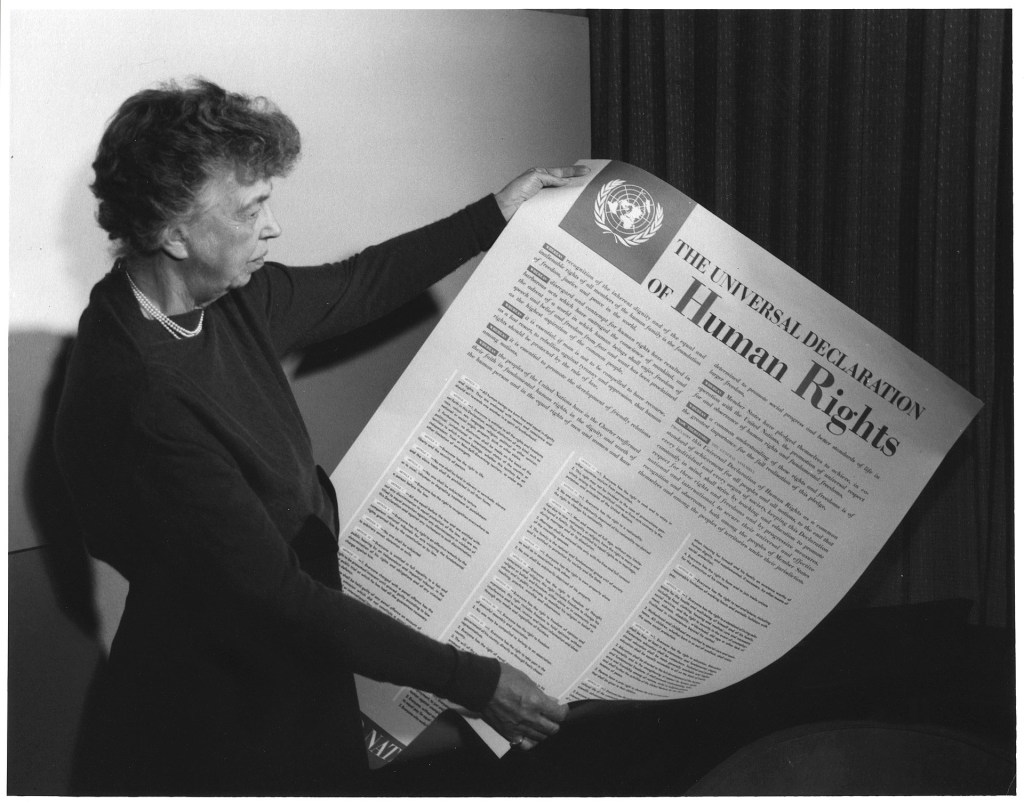
- All beings are interconnected, participating in a shared ontological ground and existing within a complex web of relationships and dependencies.
- The conditions of each being’s flourishing or suffering is inherently relational. What one does to another reverberates through oneself and the greater Whole.
- From awareness of this interdependence arises ethical responsibility: to act in ways that sustain dignity, reduce suffering, and strengthen cooperation.
- In complex human societies, governance emerges as a practical necessity for coordinating collective action and safeguarding rights. When guided by the Ten Virtues, governance can serve integrative ends.
- Active and informed participation in governance enables social structures to reflect relational reality, promoting accountability, equality, and collective well-being.
- The aim of political organization is the continual refinement of institutions so they may better reduce fragmentation and support the flourishing of all.
The Progress Principle

- The history of humanity is a nonlinear journey marked by both profound moral insight alongside grave injustice and collapse. Across time, societies have both expanded and denied the recognition of dignity, equality, and shared responsibility.
- As awareness of interdependence deepens, moral concern widens. Societies that recognize the intrinsic worth of all persons reduce unnecessary suffering and build more stable and just institutions. Where such efforts are listed, fragmentation, exploitation, and preventable harm intensify.
- Progress is not guaranteed but structurally favored through Ji’s integrative nature. Tribalism and injustice may appear stable in the short term, but our interconnected reality makes it such that their fragmentary consequences inexorably accumulate over time.
- The long-term viability of humanity depends upon expanding circles of moral concern and increasing global collaboration. As technology, ecology, and economy bind humanity closer together, actions in the Modern Age have greater impacts than those in the past; isolationist and exclusionary systems have become less sustainable.
- A peaceful, economically participatory and democratic global polity is not an inevitability, but it represents the most coherent expression of humanity’s interdependence — the political form most aligned with Ji. Such a civilization can only emerge through conscious ethical effort. Persistent resistance to Reality’s integrative nature risks humanity’s ultimate collapse.
 Jiaya
Jiaya 
Leave a comment