

“Beloved-of-the-Gods, King Piyadasi, does not consider glory and fame to be of great account unless they are achieved through having my subjects respect Dhamma and practice Dhamma, both now and in the future.” – Aśoka
- Addressing External Suffering
- Global Governance
- Economic Stewardship
- Taxation
- Democracy and Civic Duty
- Media and Information
- Technology and the State
For individuals, society, and the planet to flourish — and for all beings to grow on the path to equanimity — governance must be ethical, equitable, and aligned with the interconnected reality Jiayan teaching recognizes. The role of governments is not to rule over people, but to serve as a mechanism for reducing suffering, ensuring that external burdens do not obstruct the pursuit of inner peace and self-fulfillment.
Addressing External Suffering
While individuals and their communities can and should help each other to reduce internal suffering, it is the duty of government to alleviate external hindrances. When basic needs are met (food, water, shelter, healthcare, security, and education), people are freed from the anxieties of mere survival, allowing them greater opportunities to cultivate virtue. Financial stability is essential, for a mind consumed by poverty and uncertainty will find it considerably more difficult to reach equanimity.
It is the obligation of governments to safeguard the vulnerable, particularly oppressed groups, the environment, and those at risk of economic exploitation. The presence of a just governing body is necessary to counteract bad actors and uphold the principles of fairness, dignity, and sustainability. Economic systems must be structured to prevent exploitation and ensure opportunities for flourishing are accessible to all (more on that later).
Global Governance
In an Age where humanity faces global crises of unprecedented scale, the interdependence of our species and the planet is more apparent than ever. This is the bedrock of the Jiayan goal of global governance — international problems require international solutions. The Progress Principle points toward a union of the world in a borderless representative democracy that preserves cultural diversity and works to ensure global social and economic equality and equity. Only through the destruction of all arbitrary barriers can humanity not only flourish, but survive its self-destructive tendencies; insular, dominion-focused systems (manifested in the present through our neoliberal corporatist world order) will inevitably collapse from the weight of their own disalignment. This is not to say that a world federation would represent a final chapter in the human story; far from it. Rather, Jiaya emphasizes this form of government in particular as humanity’s nearest horizon. We as a species must eternally walk the path of epektasis if it is to strive for eudaimonia for all.
The world’s most democratic nations should take the first step towards global cooperation through collective defense alliances accompanied by common currency arrangements and open border agreements. Such integration must be accompanied by strong redistributive mechanisms to prevent asymmetric economic harm to less developed member states. The demonstrated benefits of these democratic partnerships — security, freedom of movement, and the general transactional convenience that common currency zones afford — will create incentives for other nations to pursue democratization and regional union on their own terms.
While I present a global government as the polity best equipped to serve interdependent reality, there are other ways of accomplishing it. What’s important is that humanity begin to organize and think of itself globally, not nationally (and certainly not individually). The world doesn’t have to unite in the sense that there is one single federal government; there could be multiple regional unions that meet every year to coordinate and the same general idea is achieved. However, to keep it “simple”, I only focus on one possible route: the global government concept, as it makes international cooperation far easier.

“No democracy can exist unless each of its citizens is as capable of outrage at injustice to another as he is of outrage at injustice to himself.” – Aristotle
During a transitional period of regional union consolidation, immigration from non-member states will likely remain a political issue. Immigration must never be treated as a privilege but as a human reality to be managed with dignity. No person should be turned away on the basis of origin. At the same time, the resources of democratic states risk being overwhelmed due to these benevolent policies.
As such, the root causes of displacement and brain drain (primarily the consequence of colonial extraction and exploitative economic arrangements that continue to this day) must be addressed through expansive, unconditional foreign aid. Make no mistake: this aid is not charity but a moral duty. Wealthy democratic nations accumulated their modern advantage through historical harm and therefore owe reparations to the communities that were its victims. Reducing the conditions that compel migration is inseparable from honoring the dignity of those who migrate.
Economic Stewardship
The corporate model is, by its very nature, structurally disaligned with the reality of interdependence. Shareholder corporations subordinate the well-being of workers and the natural world to the accumulation of private profit. Their internal hierarchies contradict democratic values, and their drive toward consolidation concentrates power in ways that undermine collective agency. No amount of corporate social responsibility training can remediate their built-in flaws. Alignment with the Progress Principle necessitates their eventual abolition, begging the questions of what would replace them and how we would get to that point.
The transition toward Jiaya’s envisioned cooperative economic order would be pursued through a sequenced and realistic process. The vigorous enforcement and strengthening of antitrust law, which has been largely ignored under the neoliberal economic order we find ourselves in, would be the most immediate priority. Existing megacorporations, whose scale allows them to distort markets by swallowing up competitors and inflating prices, capture regulatory bodies, and suppress democratic participation, must be broken up. This is a prerequisite, as reducing corporate scale creates the conditions under which cooperative alternatives can compete on a level playing field. The effective constraint of such entities requires coordination at the global level, reinforcing the necessity of international democratic institutions and empowering economic unions.
Once cooperative enterprises have been given this structural space to flourish, the phased legislative prohibition of the shareholder corporation model can proceed over a carefully managed timeline. This deliberate structural transformation would be guided at each stage by ethical oversight committees. Other routes are possible as well: in cases of corporations that handle necessary goods (the aforementioned basic needs), it may be in the public’s interest for the government to acquire it wholesale instead of breaking it up. Such businesses would be the first to be examined due to the critical importance of their services.
Ethical oversight committees would play a crucial role as citizen regulatory bodies in a Jiayan order. Its members would be chosen via lot à la Athens and be composed of local community delegates, ethicists, environmental stewards and scientists, legal experts, and representatives from worker bodies and organizations for youth and marginalized groups. On the economic front, the committees would evaluate enterprises based on their labor practices, governance structures, environmental impacts, and contributions to collective flourishing. Rather than imposing size limits, these bodies would assess whether a business’s scale undermines democratic agency, entrenches inequality, or harms the interdependent web of life.

“As long as poverty, injustice, and gross inequality persist in our world, none of us can truly rest.” – Nelson Mandela
Taxation
A just taxation system is critical to ensuring society is structured in a way that prevents the accumulation of extractive wealth and supports collective flourishing. Through an understanding of interdependence, we recognize that we all owe something to one another. There is no such thing as the self-made man that started his business from nothing. It is nothing but an individualist lie that minimizes the role of opportunities and circumstances afforded by community and state services.
Three complementary taxes would serve to fund the services of a Jiayan society. First, a steeply progressive income tax; those with much greater incomes than the collective would contribute proportionally more. They are obligated to give back what they received (naturally, that money goes to services they benefit from as well). This tax structure protects those of modest means from bearing a disproportionate burden.
Secondly, a wealth and asset tax — often not even considered by “progressive” countries — targets wealth that generates returns independently of labor. Left unchecked, this compounds inequality across generations and represents a massive income stream that is hoarded rather than invested back into society.
Finally, a land value tax targets the unimproved value of land. This seeks to discourage the speculative hoarding of land as an asset while encouraging productive use. This ties into Jiayan philosophy and policy on property, through which the accumulation of private property is highly discouraged, with most of what currently lies in the private sector today being folded into the pubic sector and commons. Revenue generated from all three of these tax structures would go towards public goods and services as well as environmental restoration.
Democracy and Civic Duty
Governance under Jiayan principles must be fundamentally democratic. Democracy, reflective as it is of the interconnected and interdependent nature of reality, is the only just form of government developed thus far. Democracy here is understood not merely as a procedural mechanism of periodic elections, but as an ongoing, participatory practice of co-stewardship. It requires continual engagement, robust public discourse, and a commitment to consensus-building. True democracy demands that every person has an equal voice and vote in shaping their society.
Likewise, citizens have a duty to engage in governance; through voting in free and fair elections, organizing, protesting, running for office, and, when one’s government no longer honors its social contract to adequately provide for its people nor treat all of its members with the compassion and respect they deserve, revolting to target those individuals or bodies responsible for the most suffering and restore balance to governing institutions. Passive disengagement and apathy allows injustice to take root; it is a moral obligation to stay informed and vigilant to ensure progress is maintained and deepened. The implementation of mandatory voting, at least in provincial and global elections, should be considered in reflection of the understanding that democratic understanding is not a right, but a responsibility.
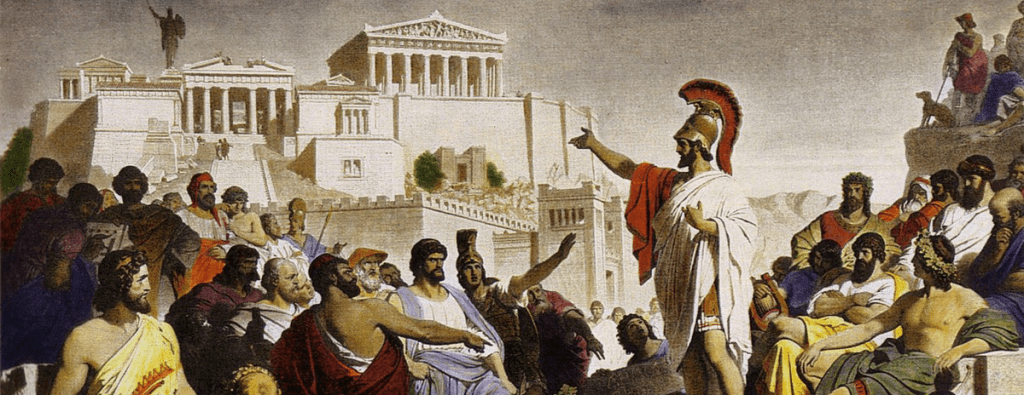
“The best way to enhance freedom in other lands is to demonstrate here that our democratic system is worthy of emulation.” – Jimmy Carter
Jiayan reverence (for lack of a better word) towards democracy does not extend to all issues. Human rights, for example, are not subject to majority opinion. Democracy operates within the Jiayan moral framework itself grounded in Ji’s relational structure: all beings possess intrinsic worth by virtue of their participation in the web of existence. No democratic outcome that violates this recognition is legitimate nor should a contest on such matters be held. A hypothetical Jiayan-aligned constitution would, therefore, establish a robust bill of rights enforceable by an independent judiciary.
Electoral systems must be designed to translate collective will into governance as faithfully as possible. Proportional representation with ranked choice voting ensures that diverse voices are reflected in legislative bodies rather than suppressed by winner-take-all or first-past-the-post mechanics. Direct democracy is unwieldy on a country-wide scale, let alone a global scale; it’s unrealistic to expect every person everywhere to be educated on everything. A robust legislature with fluctuating seat caps according to global population and the ability for citizens to recall their representative at any time would compensate for this.
Leadership would be drawn from thoughtfully defined provinces designed to maximize cultural and ethnic diversity at all levels — global governance should not entail a flattening and homogenization of human expression. In the process of globalization, care must always be taken to ensure cultural and contextual sensitivity.
Ethical oversight committees would come into play here as well, a vital supplement to elected government and crucial to the system of checks and balances. In addition to their powers regulating business, these committees would be able to call representatives in for questioning at any point to ensure their government is working as it is intended.
Media and Information
A democracy cannot function without an informed citizenry, and an informed citizenry cannot exist within an information environment structured around the maximization of engagement and profit (i.e. present day). The concentration of media ownership in the hands of a small number of private actors, combined with algorithmic systems designed to amplify outrage, fear, and polarization, represents one of the most significant sources of fragmentation in the Modern Age and I would argue the most significant in the 21st century. Addressing this requires action on two fronts.
Ownership of media infrastructure falls under the targeting of megacorps discussed previously. No private entity should be permitted to exercise dominant influence over the information of society. Independently-governed public broadcasting must be constitutionally guaranteed funding as a civic institution. Naturally, this would not be a state mouthpiece, but a protected space for journalism and public discourse, free from both commercial pressure and government interference. If public media regurgitates the priorities of whoever holds power, then we’re back at square one.
Algorithmic amplification would be handled primarily as a matter of transparency. Platforms (which would, again, be decoupled from parent megacorps) must be required to demonstrate that their systems do not systematically amplify misinformation, incite hatred, or suppress dissenting voices. Ethical oversight bodies (rather than government committees in order to avoid the intrusion of any special interest capture) would have the authority to audit and ban platforms that demonstrably harm the public.

“Viewing present conditions, we see that even though nationalism cannot precipitately be abolished and warfare cannot be eradicated all at once, speaking in terms of universal principles, men’s minds do behold this coming about. That to which the general state of affairs tends will in the future be attained. It is certain that One World will eventually be reached.” – Kang Youwei
Technology and the State
Technology, when developed and used mindfully, is among humanity’s most powerful tools for reducing suffering and expanding the conditions of collective flourishing. But so often in the Modern Age, technology has been deployed unskillfully as the pursuit of shareholder profit and the enrichment of its deployers is placed above the Whole. Artificial intelligence in particular represents a profound transformational moment for humanity. Its usage absolutely cannot be left to market incentives or the discretion of private developers alone. The ramifications on civilization such technology could have makes it a matter of public interest and it must be subject to meaningful democratic oversight.
This does not require that governments monopolize AI development, but that the public retains genuine authority over the conditions under which AI systems are built and utilized. National governments must work in tandem (operating as a precursor to the broader global governance framework described elsewhere) to coordinate standards, share safety research, and prevent the emergence of unaccountable concentrations of AI power across national boundaries. The danger this technology poses unregulated requires international attention and action.
There are three main areas of particular concern as it relates to AI regulation. First, its environmental impact: AI systems, particularly large-scale generative models, consume extraordinary quantities of energy and water. Their usage must be subject to rigorous environmental assessment. The location in which they are built is of critical importance as well so as to ensure communities’ water supplies are not compromised. Facilities should be subject to severe zoning restrictions. A potential workaround: prioritize colder climes so that cooling does not require nearly as much energy.
Second, misinformation: AI-generated content poses an unprecedented threat to the integrity of our information environment. Its use in the production and amplification of misleading content must be clearly prohibited and enforceable, with liability attaching to both developers and users where harm can be demonstrated.
Last and certainly not least, art: the use of AI as an instrument of mass cultural production — generating content at scale in ways that displace creative labor and further entrench the art-as-instrument tendency (see: The Two Processes of Art) — is antithetical not only to the Jiayan understanding of art, but art’s pivotal role within the human condition. Artists must retain meaningful control over their creative work, and the use of AI in artistic contexts must be subject to transparency requirements and the informed consent of those whose work has been used in training. Works using AI in the majority or entirety of the creative process should be banned to preserve the sanctity of humanity’s purest form of expression and communication (exceptions could be made in cases of commentary on AI itself).
 Jiaya
Jiaya 
Leave a comment