ARETEIOI CANON INDUCTEE
| Lived | 14 April 1126 – 11 December 1198 (Gregorian) 14 April 11126 – 11 December 11198 (Holocene) |
| Eras active | Confluence |
| Associated phase | Yielding |
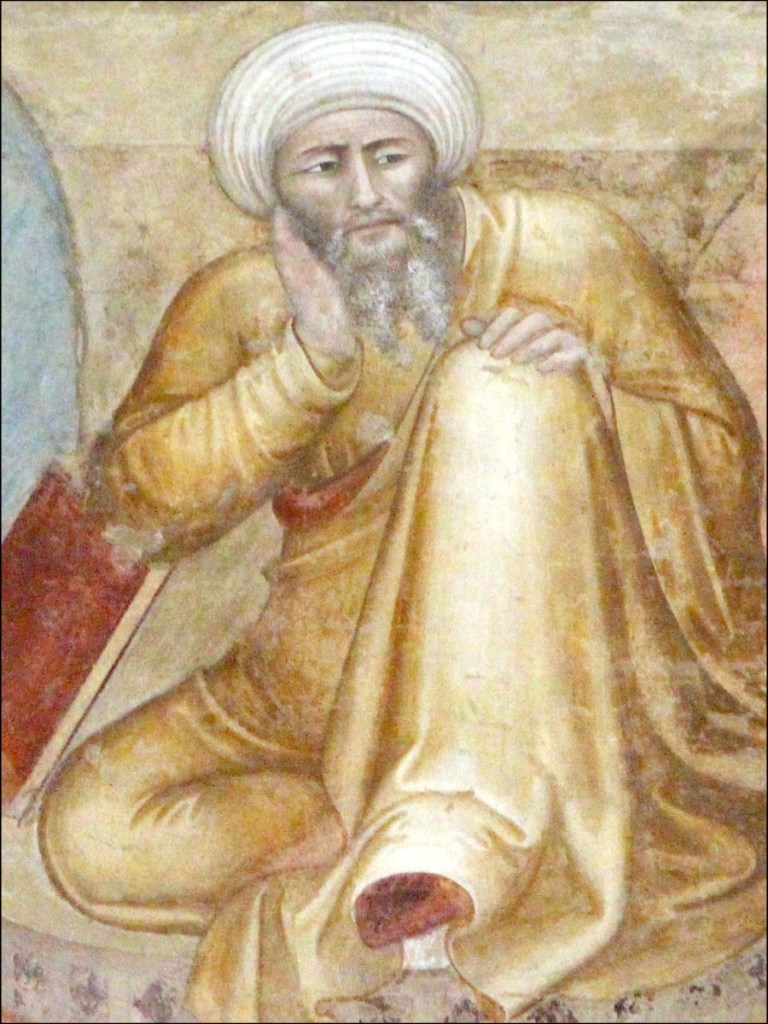
Ibn Rushd was a Muslim polymath and faqīh who wrote on subjects from philosophy and theology to neurology, law, and physics. Rushd attempted to restore status to the original teachings of Aristotle in the Muslim world in light of contemporary attacks on philosophy.
Reasons for Induction
- Harmony in Truth: Ibn Rushd argued for a synthesis between religion and philosophy, stating that “truth cannot contradict truth.” While scholars of his time scathingly critiqued philosophy for being its purported conflicts with Islam, Rushd viewed the relationship between the two as symbiotic. He argued that the Quran calls for Muslims to reflect on nature and study philosophy to better understand God
- Rushd’s rejection of dogma in the face of opposition and his advocacy of reflection on nature are hallmarks of the virtues of courage, wisdom, and equanimity
- Universal Wisdom: Rushd was passionate about incorporating Greek thought into the Muslim world. Rather than shunning them as others of his time had done, he felt their teachings should be embraced, stating, “if before us someone has inquired into [wisdom], it behooves us to seek help from what he has said. It is irrelevant whether he belongs to our community or to another.”
- Rushd’s statement speaks to a transcendent view of humanity beyond cultural or religious lines – a clear alignment with the oneness of all things
- Advocate of Equality: In contrast to contemporary Islamic societies, Ibn Rushd viewed the participation of women in government as vital to its continuation. He called for women to be equals not just in militaristic and philosophical roles, but as heads of state as well
- Through his lamentations on the state of governance in the Almoravid and Almohad empires and the plight of women, Rushd demonstrates an understanding of the inherent equality of all things (Unity Principle) and the virtues of justice and right speech
- Intellectual Oneness: While Ibn Rushd’s concept of the “unity of the intellect” (his view that there is only one material intellect shared by all humans) is not entirely aligned with Jiayan thought, it serves as a philosophical bridge towards ideas of human and universal interconnectedness
- Rushd’s theory resonates with the teachings of anattā and monism. The idea that all humans share a universal intellect has echoes in the realizations that all beings share a common essence, thus no unchanging self exists
- Medicinal Innovator: Rushd made notable strides in the field of medicine. He was the first to document that the retina is the part of the eye responsible for sensing light, rather than the lens. He was the first to describe the signs and symptoms of Parkinson’s disease and formulated a more accurate understanding of stroke
- Rushd’s tireless commitment in all aspects of life, including medicine, clearly embodies the virtues of right livelihood and right effort. His dedication to improving the world was apparent
- Virtuous Blueprint: Ibn Rushd’s Aristotelian philosopher-king is not in line with Jiayan principles, but he does call, in his commentary of Plato’s Republic, for virtuous governance and articulates the qualities that make such a virtuous ruler, including a love of learning, dislike for amassing wealth, and magnanimity
- In the context of his time, when sovereigns were commonplace in most of the world, Rushd’s writings on virtuous governance lights the way forward. His ideal ruler exemplifies the virtues of courage, wisdom, right action, and moderation
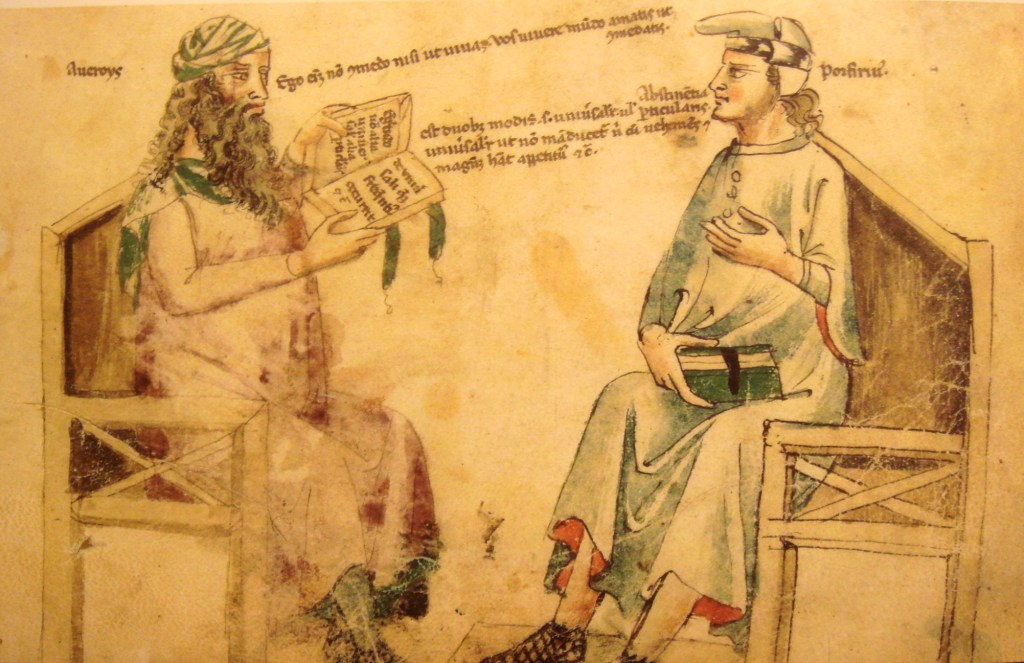
“Ignorance leads to fear, fear leads to hatred, and hatred leads to violence. This is the equation.” – Ibn Rushd
 Jiaya
Jiaya 
Leave a comment