ARETEIOI CANON INDUCTEE
| Lived | 7 May 1861 – 7 August 1941 (Gregorian) 7 May 11861 – 7 August 11941 (Holocene) |
| Eras active | Dominion |
| Associated phase | Renewal |
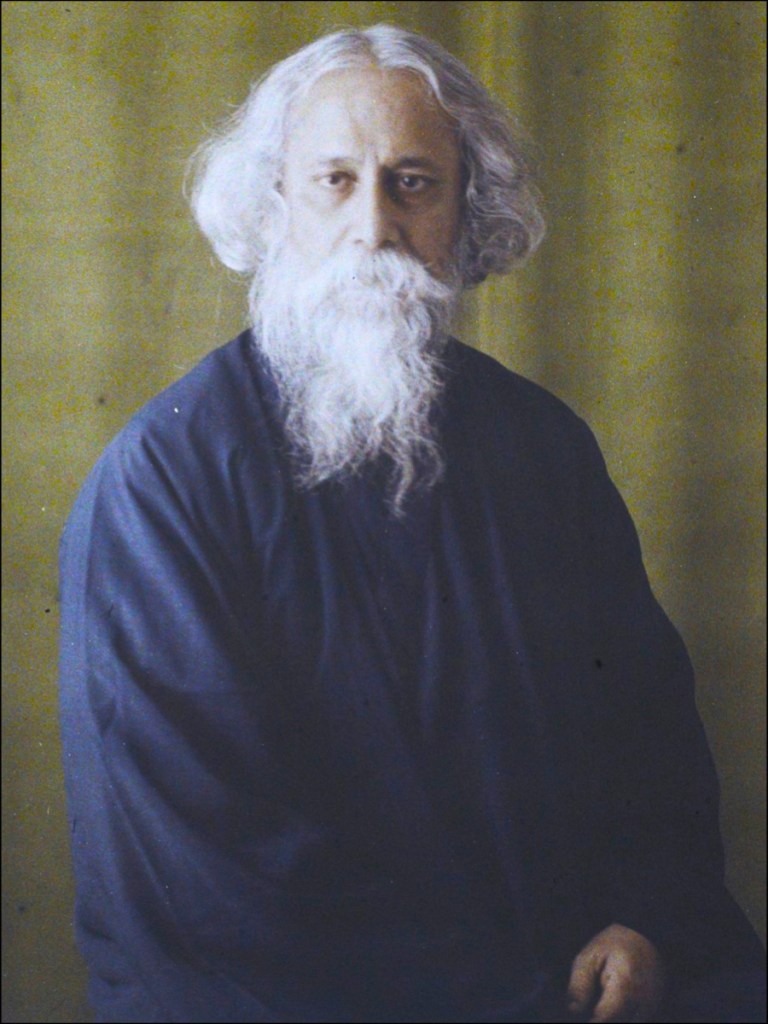
Rabindranath Thakur was a Bengali polymath active during the Bengali Renaissance, known for his poetry, short stories, plays, music, and paintings. Thakur’s work was highly influential and popular in the Indian subcontinent during a time of political upheaval.
Reasons for Induction
- Limitless Artistry: Thakur was an artistic pioneer and explorer in the purest sense – there was no medium he couldn’t master. He is credited with inventing the Bengali-language short story genre at just 16. His poetry, perhaps the most famous of the mediums in which he worked, is highly eclectic in genre, ranging from classical formalism to eventual reactions to modernist and realist techniques. At the time of his death, Thakur was the most prolific composer and songwriter in history, with 2,230 songs to his name, a body of work just as varied as his poetry. Most of Thakur’s works were lyricised, demonstrating a deep grasp of synthesis and balance between art forms
- The unsurpassed breadth of Thakur’s worth displays a masterful cultivation of the virtue of wisdom while the dedication of his life to such an endeavor embodies right livelihood
- Voice for the Downtrodden: In his stories, Thakur exhibits a profound empathy, primarily focusing on the plight of the common people and the oppressed. In works like Haimanti and Musalmanir Golpo, he proved a capable social critic on topics such as Hindu marriage and religious tensions between Hindus and Muslims in the Indian subcontinent. Thakur established the Institute for Rural Reconstruction (later renamed Shriniketan) with the aim of addressing caste consciousness and untouchability
- The views expressed in Thakur’s work, critiquing centuries, if not millennia, of social and cultural customs, demonstrate the virtues of right speech, justice, and courage. His recognition of the equality of religious minorities and women, as well as his rejection of the deep-seated caste system, echoes the Jiayan teaching of monism
- Inner Light: Thakur was deeply in tune with the cosmic principle of Ji. In some of his most influential poetry, he meditates on the jeevan devata, the “living God within” and his “Lord of Life.” It is from the jeevan devata that Thakur derives his boundless creativity
- The concept of the jeevan devata, which symbolizes the divine presence that guides and inspires human existence, resonates strongly with the cosmic ordering principle of Ji
- Defender of Freedom: Thakur was an outspoken critic of both the imperialism of the British Empire and extreme strains of Indian nationalism, though he was supportive of independence. Thakur also despised the communalism rife within the Indian subcontinent and saw the partition of Bengal as a British plan to curb the spread of independence
- Thakur’s balanced views on complex political topics speak to his cultivation of the virtues of moderation and right intention. His resistance to the construction of arbitrary religious and ethnic identities speaks to an understanding of monism and the Unity Principle
- Herald of Universalism: Thakur was a man ahead of his time concerning the need for unity among peoples. He stated that “each country of Asia will solve its own historical problems according to its strength, nature, and needs, but the lamp they will each carry on their path to progress will converge to illuminate the common ray of knowledge.”
- This quote by Thakur aligns with the Progress Principle and the teaching of epektasis
- Architect of Liberated Learning: Thakur’s perspective on education was that of a visionary. Comparing classroom schooling to that of a caged bird force-fed textbook pages to death, Thakur conceived of universities as centers beyond the limits of national borders. He established a school at Santiniketan based around the brahmacharya system in which gurus gave students emotional, intellectual, and spiritual guidance
- Thakur’s stance on education, which he then actualized, demonstrates a commitment to making the world a better place, embodying the virtues of right speech and right action
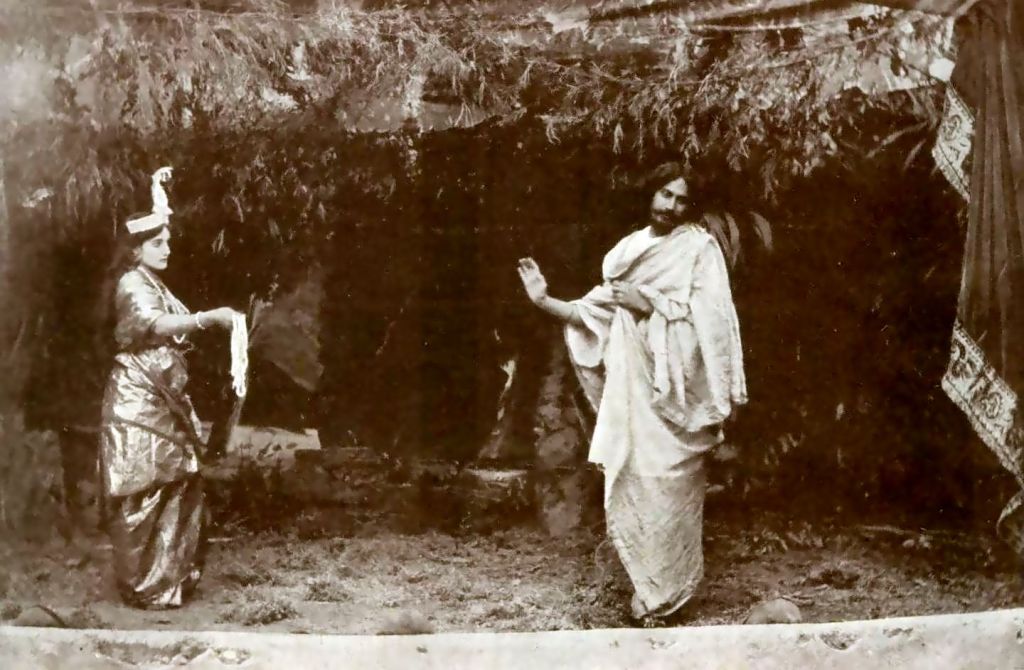
“The butterfly counts not months but moments, and has time enough.” – Rabindranath Thakur
 Jiaya
Jiaya 
Leave a comment