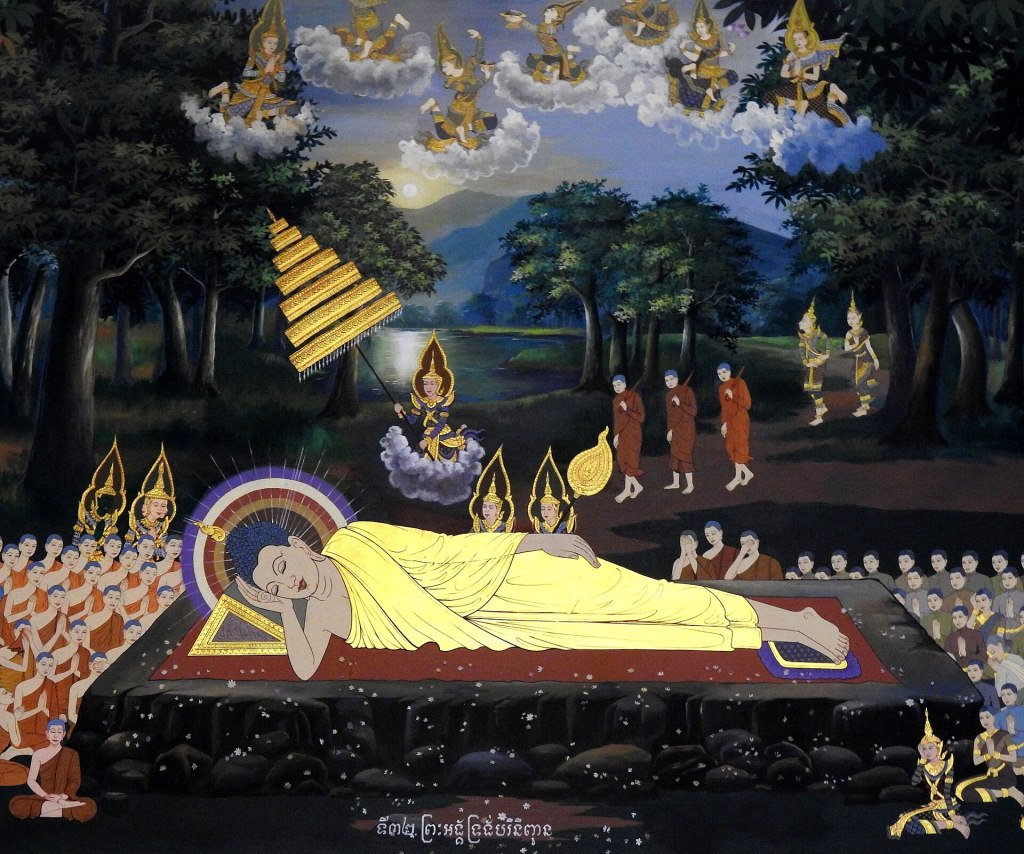
“Those whose minds are shaped by selfless thoughts give joy when they speak or act. Joy follows them like a shadow that never leaves them.” – Siddhartha Gautama
The teaching of anicca, by which anattā necessarily follows, raises questions where epektasis is concerned. If the self is illusory, who or what exactly is undergoing epektasis? We must first understand that the self is not fixed nor essential but a unique articulation of Ji sufficiently coherent to bear provisional agency and moral responsibility, much like a planet is a unique articulation sufficiently coherent to have form distinct from the space around it. The self is a relational pattern which perceives itself as individual in the same way a droplet of water might in a rushing stream. This does not diminish our existence; it recontextualizes it and if fully embraced, allows for a profoundly harmonious shift in perspective.
The tension between clinging to our selfhoods and the recognition of its illusory nature is not a philosophical dilemma. Rather, it is the fuel that drives epektasis forward. One cannot first dissolve the self and then pursue virtue. The pursuit of virtue is what dissolves the self’s imagined boundaries.
The stages of “personal epektasis“ outlined below do not represent a linear path, nor do they manifest identically for everyone.
Delusion
Characterized by perceived separation from the interconnected universe and Ji, this state is one of spiritual disarray and deep-rooted illusion. One views the self as an independent, isolated agent, rejecting the interdependence of all things and clinging to false realities. Beings in this state are dominated by ego, hatred, pride, and attachment to illusion. They are often consumed by destructive desires, insatiable craving, and a denial of consequence, struggling futilely against the natural flow of the universe.
Their behavior is shaped by self-centeredness, manipulation, compulsive indulgence, or apathy. Others are seen as tools or threats — objects to control, ignore, or scapegoat. Those in this state may cling to tribalistic, prejudiced thinking for comfort and reject empathy as weak. Any potential for transformation is dim, but not impossible, and most often only breached by personal suffering or loss.
Awareness
This state is defined by instability between fleeting equanimity and lingering dissatisfaction. Neither fully harmonious with Ji nor entirely divorced from it, those in this state experience moments of peace interrupted by doubt, fear, and longing. They are aware — at least intuitively — of the deeper truths of existence, yet remain hesitant, unable, or apathetic about embodying them. While the harsher vices of Delusion recede, attachment, fear, and confusion persist. Right Intention, Right Effort, and Equanimity may begin to emerge, but inconsistently.
Their lives may oscillate between lethargy and ambition, spiritual yearning and escapism. They often express a desire to growth but fail to take meaningful steps towards it. Others may be viewed with both pining and suspicion, as they long for connection but fear vulnerability. Though mired in the fog of indecision, this stage offers potential for transformation through study, contemplation, and the examples of others.
Threshold
A transitional stage marked by a conscious turning towards Ji — the moment when one beings to act not merely out of longing or confusion, but out of genuine moral intent. Those who enter this stage may falter and regress into lower states; but once they have truly passed it — once they realize the oneness of all things — it becomes nearly impossible to return to ignorance and delusion.
This stage is marked by moral discomfort, ethical awakening, and an increasing alignment between internal values and external behavior. Though one may still stumble, the direction becomes clear. They feel called not to escape suffering, but to meet it with Courage and compassion. It may be painful, exhausting, and filled with uncertainty, but it marks a decisive turning toward the Infinite and the first dissolution of the self into Ji.
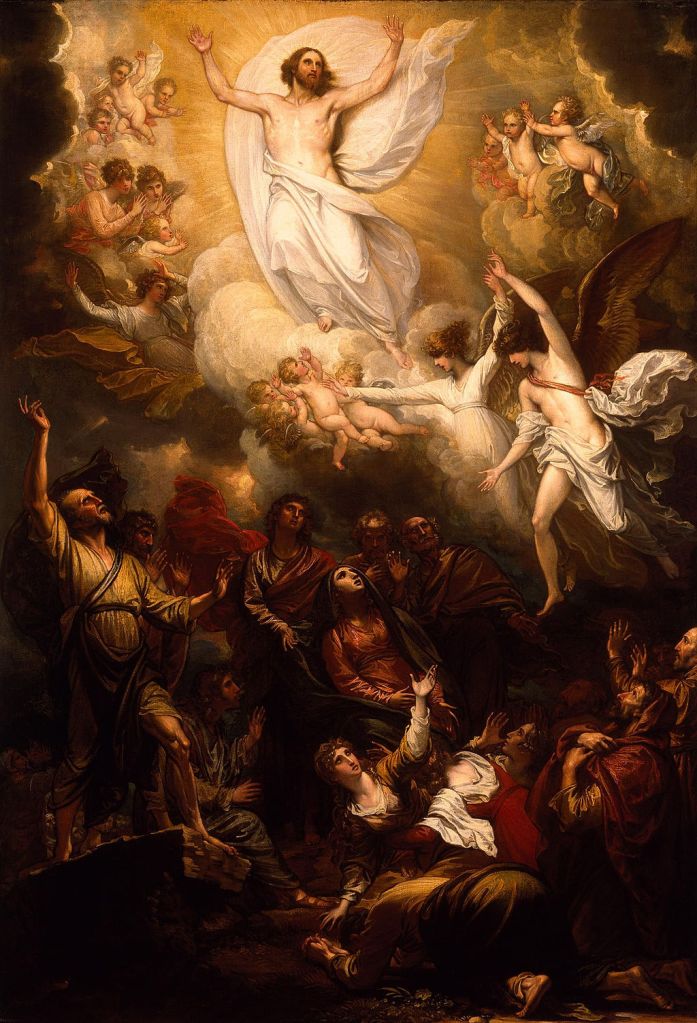
“Whoever does not love does not know God, for God is love.” – 1 John 4:8
Striving
This state marks an earnest striving for equanimity and harmony with Ji. Here, the individual actively works to transcend worldly attachments through the cultivation of compassion, wisdom, and inner clarity. Beings in this state recognize the interconnectedness of all things not as theory, but as reality. Subtler delusions such as pride or existential restlessness may persist, but they are consciously examined.
The virtues of Right Intention, Wisdom, Justice, and Right Effort are often actively practiced. Individuals in this state may live modestly, serve others, or guide those still trapped in the lower stages. Others are seen as sacred mirrors — their suffering, joy, and dignity regarded as one’s own. Though challenges remain, this stage is marked by momentum. They view themselves as a siphon through which the current of Ji can flow, propelling them toward deeper alignment.
Harmony
This stage reflects the transcendence of all attachments, illusions, and distinctions between self and other. The being has become a perfect expression of Ji — effortless and luminous. This stage is not simply the absence of suffering, but the presence of radiant harmony. The Ten Virtues are not merely cultivated, but embodied. All speech becomes Right Speech, all action becomes compassion, and one’s presence is healing.
There is no clinging to identity, no grasping at reward, and no resistance to either existence or nonexistence. Others are not “others” — all boundaries dissolve in the light of full realization. These beings may appear in the world as mystics, sages, or silent teachers, their ways perhaps incomprehensible to those in earlier stages.
Few reach this stage. It is not the end of moral progress, but the flowering of total inner harmony — only possible through the complete surrender of self. To live in this state is not to escape the world, but to abide within it without obstruction, illusion, and fear.
 Jiaya
Jiaya 
Leave a comment