
“There is no greater sin than desire, no greater curse than discontent, no greater misfortune than wanting something for oneself. Therefore he who knows that enough is enough will always have enough.” – Laozi
The philosophy of Jiaya holds that the primary problem permeating existence in the Modern Age is the suffering brought about by the emergence of human behavioral modernity and the global dominance of Homo sapiens. Behavioral modernity refers to the suite of traits that emerged in our species and presumably distinguish us from all other animals. This includes but is not limited to symbolic language, abstract reasoning, fine motor skill development, cooperative labor, social learning, and long-term planning. Collectively, these have come to define the universal human experience.
While all non-human animals experience suffering in myriad forms — disease, predation, weather events, parasitism, starvation, etc. — their suffering, though undeniably real, is immediate and experiential. In contrast, humans possess a unique “skill set” rooted in secondary consciousness — reflective awareness, abstract thinking, volition, and metacognition — as well as the capacity for language. This is analogous to the concept of viññāṇa.
It allows us to dwell on our experiences, construct meaning, imagine alternate futures, and crucially from a Jiayan perspective, evaluate our place in the world. It also enables us to generate patterns of thought and action that fall into incoherence with manifestation. While we are incapable of disrupting Ji itself, we are more than capable of becoming fundamentally misaligned with it, leading to fragmentation.
This deeper level of awareness brought with it a double-edged power. Through viññāṇa, we have the capacity to understand the rhythms of the universe, to intuit our place within the whole as no other animal seems to be able to. Yet that same capacity gives rise to alienation, delusion, and suffering. The emergence of secondary consciousness allowed for the possibility of enlightenment but also opened the door to spiritual dislocation and the construction of systems misaligned with Ji.
Aside: While many animals do form intricate social structures, they lack the symbolic language, fine motor skills, and technological capacity necessary to build large-scale societies capable of disrupting the cosmic balance. As far as we know, humans are the only species able to fall fundamentally out of harmony with the natural order.
Jiaya holds that suffering can be divided into two major categories: the internal and the external. The internal sufferings arise from the emergence of the secondary consciousness in a world that is impermanent, interdependent, and constantly changing. Most especially, a failure to recognize the impermanence of all things gives rise to dissatisfaction, attachment, cravings, sorrow, and despair. Through introspection, contemplation, and cultivation of the Ten Virtues, one can come to understand these patterns and gradually overcome them.
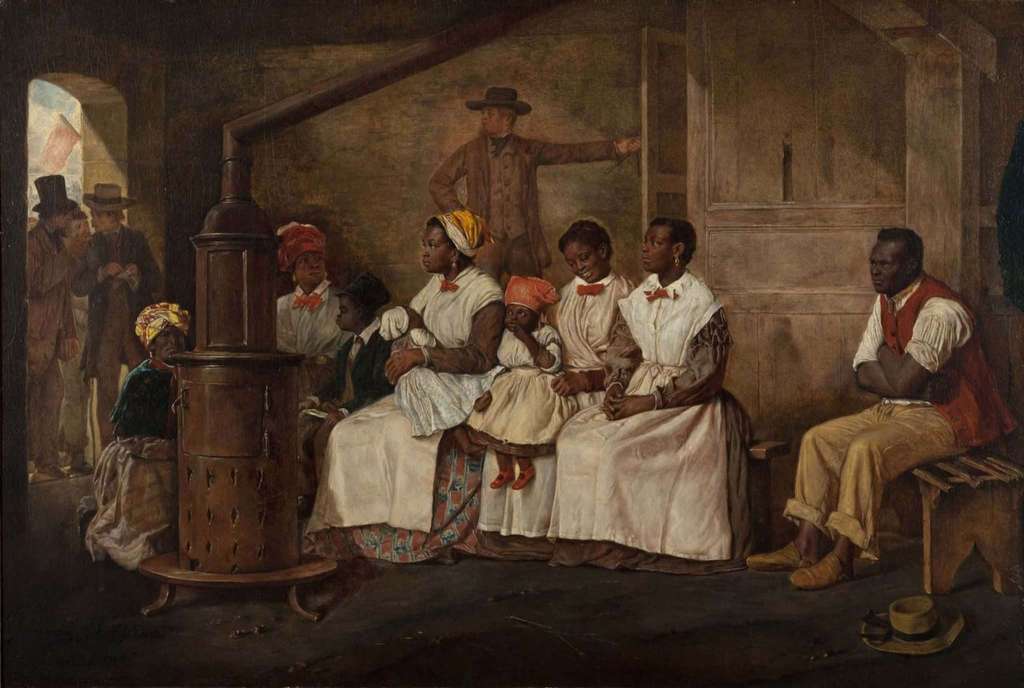
“It is no measure of health to be well adjusted to a profoundly sick society.” — Jiddu Krishnamurti
Yet internal suffering rarely remains contained within the individual. Left unexamined, it radiates into families, communities, and societies. Those who fail to comprehend the nature of Ji and thus the interconnectedness of the universe have not vanquished or weakened the internal sufferings (see: Stages of Personal Epektasis). Therefore, their behaviors contribute to external sufferings, whether through apathetic inaction or purposeful harm.
External sufferings are those imposed upon others, either by individuals or by systems. These include structural and direct violence, inequality, exploitation, abuse, and discrimination. Poverty, war, systemic injustice, and environmental destruction are among the chief culprits. Most human civilizations, particularly industrial and imperial ones, have inflicted enormous harm upon both people and non-human life — driving species extinct, polluting ecosystems, and altering the climate in ways that create suffering for generations to come. Alleviating this suffering is a moral responsibility rooted in the awareness of our interconnection.
External forms of suffering are not reducible to individual moral failings, nor can they be addressed solely through inward contemplation. They require collective action, institutional reform, and courageous compassion aimed at healing the wider web of life. To assert that such problems can be solved through private reflection is not only misguided but harmful, serving to perpetuate and exacerbate suffering.
Special Cases of External Suffering
- Mental disorder is best understood as an external suffering. While mental illnesses arise from internal imbalances, they are not something that can be overcome through reflection. Those who live with mental disorders often lack access to adequate treatment, support networks, or community resources. Jiaya affirms the moral failing lies at the foot of society when such needs are unmet.
- Natural disasters and disease, while not caused by human volition, still fall within the category of human suffering. These events are part of the natural world but the burden lies with governments and communities to prepare, mitigate harm, and care for those impacted. When systems fail to respond effectively, suffering is compounded. In the case of disease, especially when contagious illnesses are negligently spread, external suffering may also be worsened by irresponsible behavior.
 Jiaya
Jiaya 
Leave a comment