One of the most striking similarities between virtually all mythologies and cultural traditions of the world is that of the beginning: the story of the primeval waters or the cosmic ocean. These waters are typically characterized as chaotic, formless, treacherous, (in some cases, evil), and stretching on forever and ever. Through divine intervention, the waters give way to earth and earth gives way to life, perhaps not necessarily in that order.
The waters that remain, both above (the so-called “firmament” as ancient peoples understood it) and below (the oceans, rivers, lakes, and springs), are viewed as both life-giving and a source of divine punishment and destruction in areas susceptible to disasters. In this way, the waters are left behind by the gods as a reminder of impermanence (anicca) and cyclicity.
In a Jiayan mythological framework — one that seeks to get to the heart of the truth that unifies and and underlies the countless human faiths and philosophies that have provided guidance for hundreds of millions over the ages — the Cosmic Ocean serves as a helpful metaphor for the period prior to the creation, so to speak, of our universe.
It’s possible we may never know what happened “before” the Big Bang, to the extent such a hypothetical even makes sense — Jiayan teaching would advise that to be concerned about such things is unskillful unless such knowledge would increase well-being in some way. The Cosmic Ocean represents this seemingly unknowable period in our universal history; one of timelessness, endless potentiality, and chaos and, in a scientific sense, one where classical gravitational theories cease to be relevant.
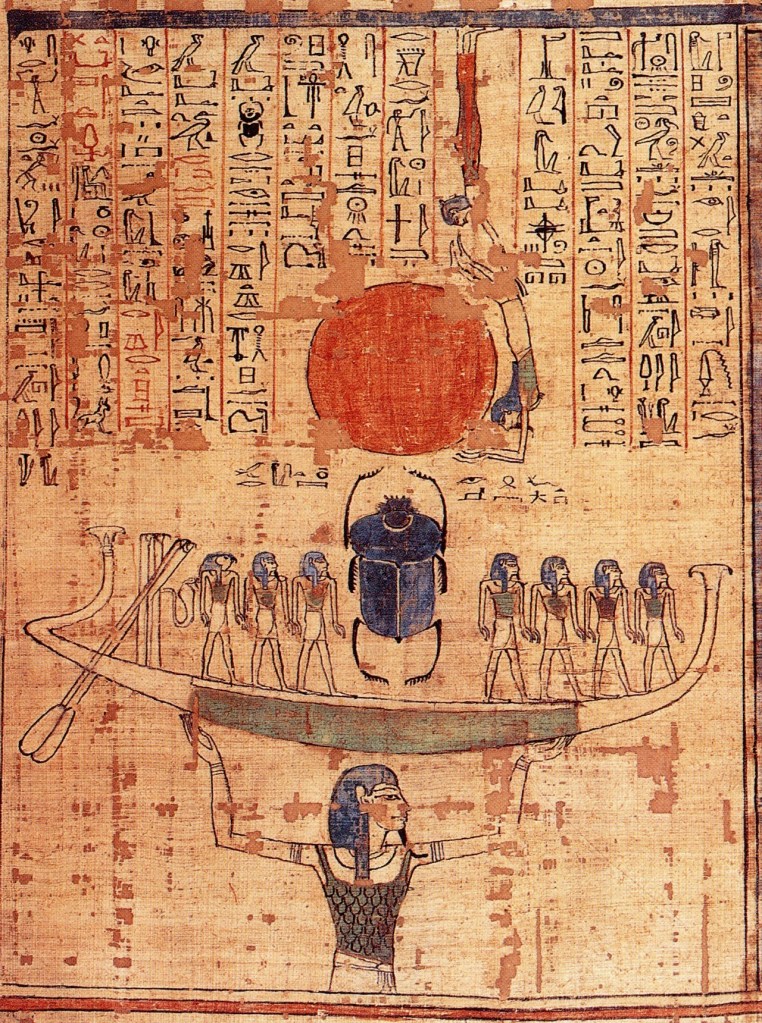
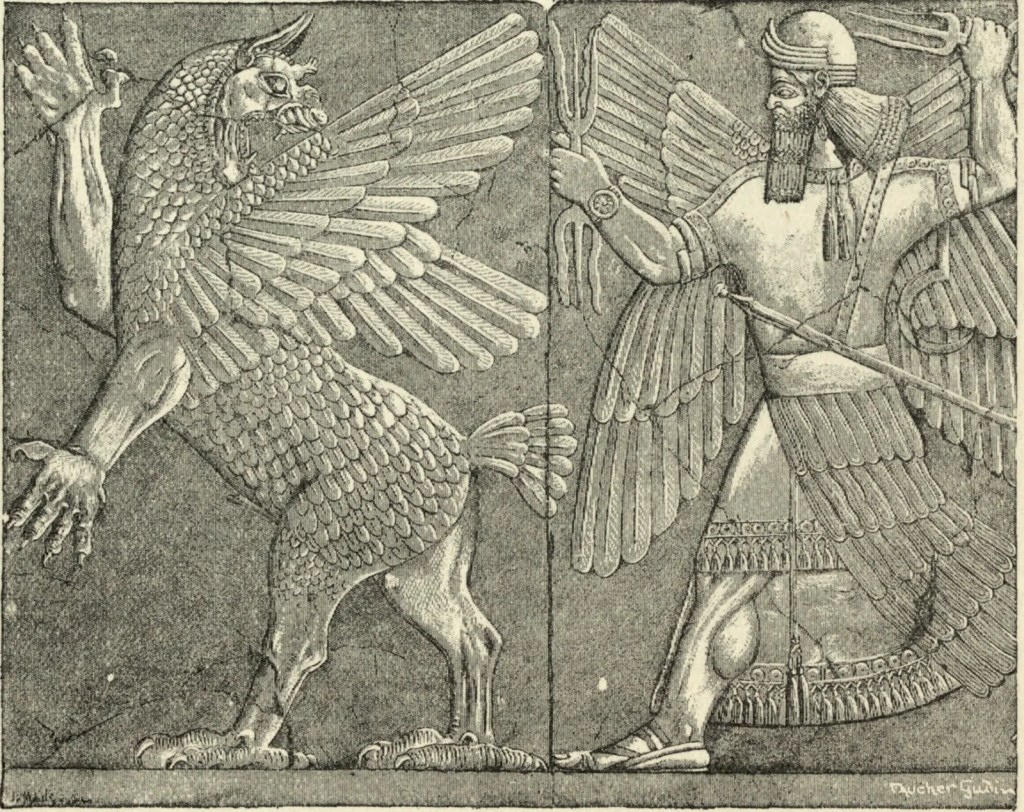
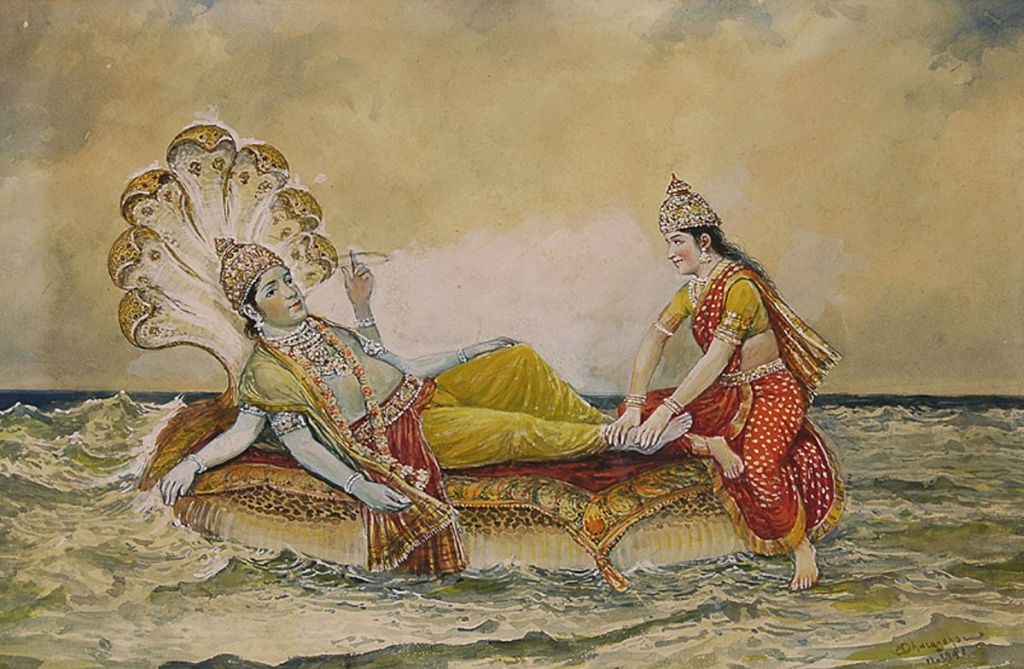
This early primordial state of the universe (referred to as the “waters,” “the deep,” or something similar) was represented in different, yet similar ways across the world — Tiamat in Mesopotamian religion and Nu or Nun in ancient Egyptian religion personify the primeval waters. Other traditions such as Vaishnavisim and Polynesian religions describe their gods as emerging from the oceans via flower or egg and observing the chaos while the Israelites’ and Mayans’ gods preexist the waters by some indeterminate period. Some cultures provide variations on the theme. For example, the gods of Japanese mythology arise out of a primeval oil. In Chinese cosmogonic myths, qi replaces water as the genesis element, indicating that a long-standing cultural mythology was already in place at the time texts like the Tao Te Ching were composed.
The arrival of the divine entities signifies the birth of the universe as we know it, thus the emergence of Ji — Order, Law, and Nature. Through a Jiayan lens, this turning point does not mean that order was imposed from outside upon chaos. Instead, Ji was always latent within the waters, waiting to be expressed. What appears as formlessness and disorder is not the absence of Ji but its unshaped potentiality. The myths capture this truth in symbolic ways: the moment of creation is the unveiling, the revelation of Ji rather than its sudden invention.
This is most often represented in the form of speech or song. Gods across many stories from the Abrahamic religions of Judaism, Christianity, and Islam to the faiths of the Lakota, Mayans, and Māori, as well as the ancient texts of the Egyptians and Babylonians feature this motif. The use of speech to represent Order makes sense when you consider that ancient peoples would have given immense authority to the word of the sovereign who was often considered to be a divine figure in their own right. However, for the purposes of a Jiayan framework, the universe comes into existence of its own accord, or as it might be helpful to say, through the will of Ji.
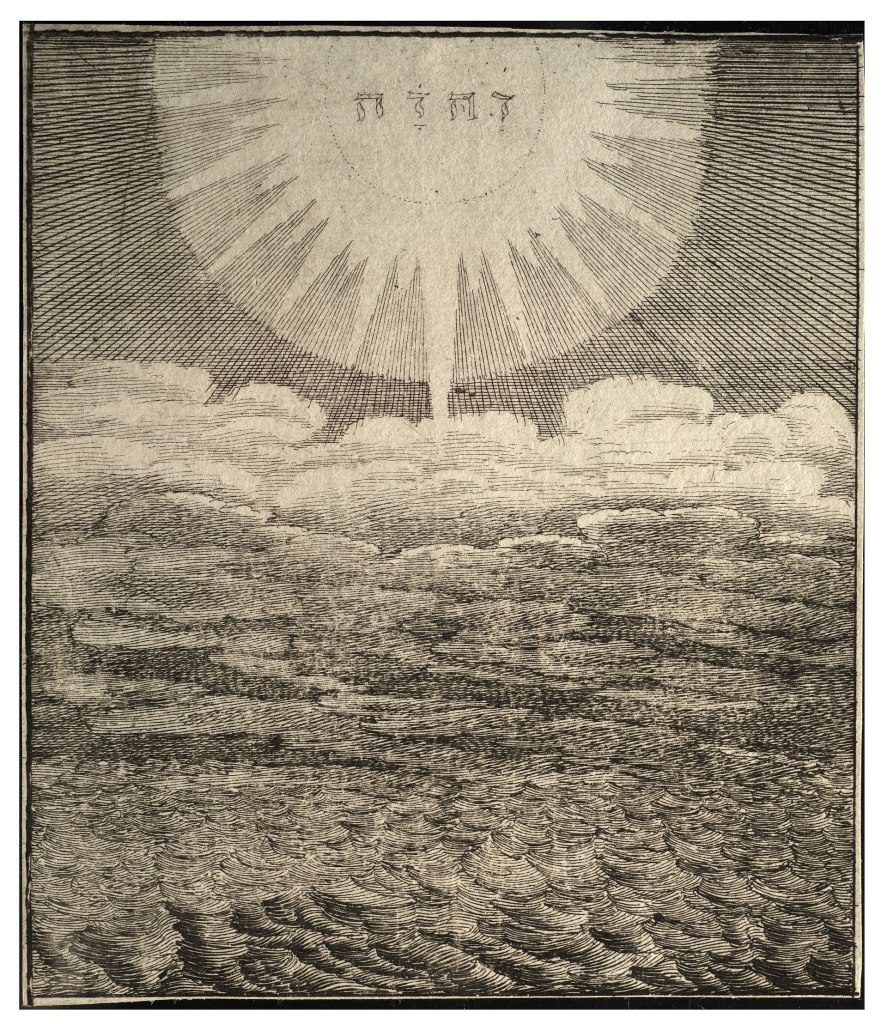
One verse from the Quran speaks to the truth of the Progress Principle, in so far that its rendition, being one of the more recent significant holy texts (though obviously descended from a long line of traditions that mutually informed and influenced each other), closely aligns with the Jiayan and current scientific understanding of the universe’s formation than any other. Al-Anbiyā 30 reads “We created from water every living thing.”
The verse points towards humanity’s greater understanding of its interconnectedness at this point in time — not just between each other but between all living things and the universe as a whole — and the value that such stories can bring to the collective cultural consciousness.
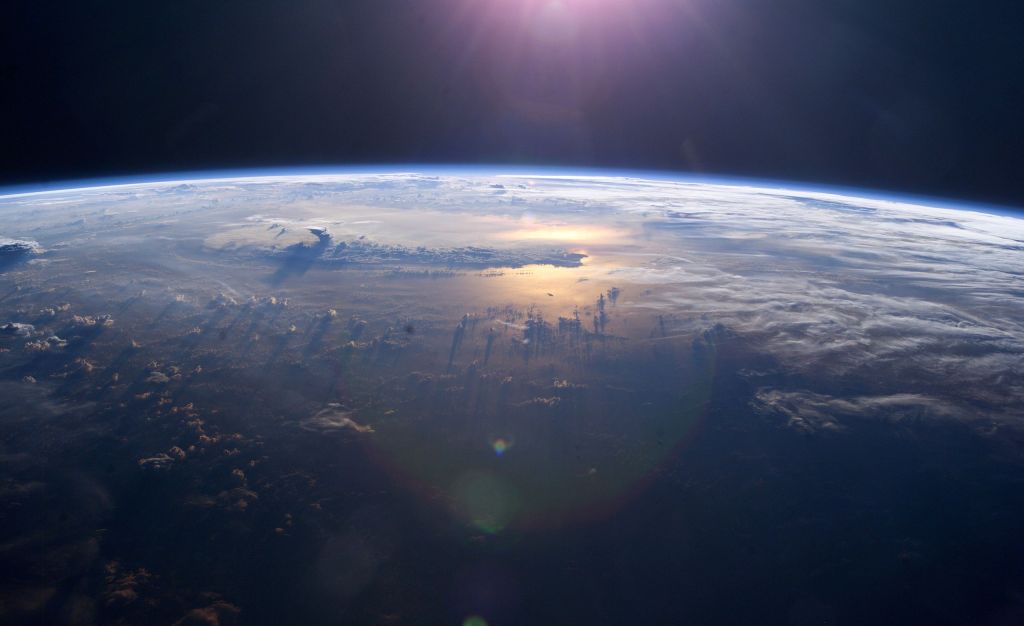
“There is not yet anything gathered together. All is at rest. Nothing stirs. All is languid, at rest in the sky. There is not yet anything standing erect. Only the expanse of the water, only the tranquil sea lies alone. There is not yet anything that might exist. All lies placid and silent in the darkness, in the night.” – Popol Vuh
 Jiaya
Jiaya 
Leave a comment