“Happy is he who performs a good deed: for he may tip the scales for himself and the world.” – Talmud
While I intend for Jiaya, in practice, to be universally applicable, it’s inevitable in my writing that I’m going to be approaching things from an American lens. We can’t escape our perspectives or biases no matter how hard we try; on the contrary, I would argue that’s the beauty of diversity. Hearing different peoples’ views on a subject can be enlightening and leads one to a deeper, richer understanding.
I bring this up because the American perspective on charity is relevant here. Due to the especially individualistic, capitalistic, and consumerist (and other such -ist) nature of American society, charity is most typically viewed as a voluntary act. Those who partake in charity are (usually) so exorbitantly rich they are giving but a small fraction of their wealth, something they wouldn’t miss if it was stolen right from under their noses. A cynic might say such people only give to charity for the PR, though the outcome is good nonetheless.
Even still, many of those who aren’t rich in America are mired in egoism and view charity as the ultimate solution to health crises, hunger, and poverty. Rather than opting for any sort of collective action that would require they take part, they insist that voluntary giving is the only way people will learn that actions have consequences. No handouts! Giving to charity once in a while (or not giving at all, leaving it instead to the richest people to do it) provides a convenient escape hatch for those who reject systemic issues and prehension.
The Jewish concept of tzedakah differs radically from this American conception of charity as the be-all and end-all of helping others. Tzedakah views giving not as a voluntary act, potentially wielded to elevate one’s social status, but as a moral obligation. Tzedakah can be money, time, or resources to the needy. It is given in the name of righteousness and justice rather than generosity and is mandatory even for those of limited financial means.
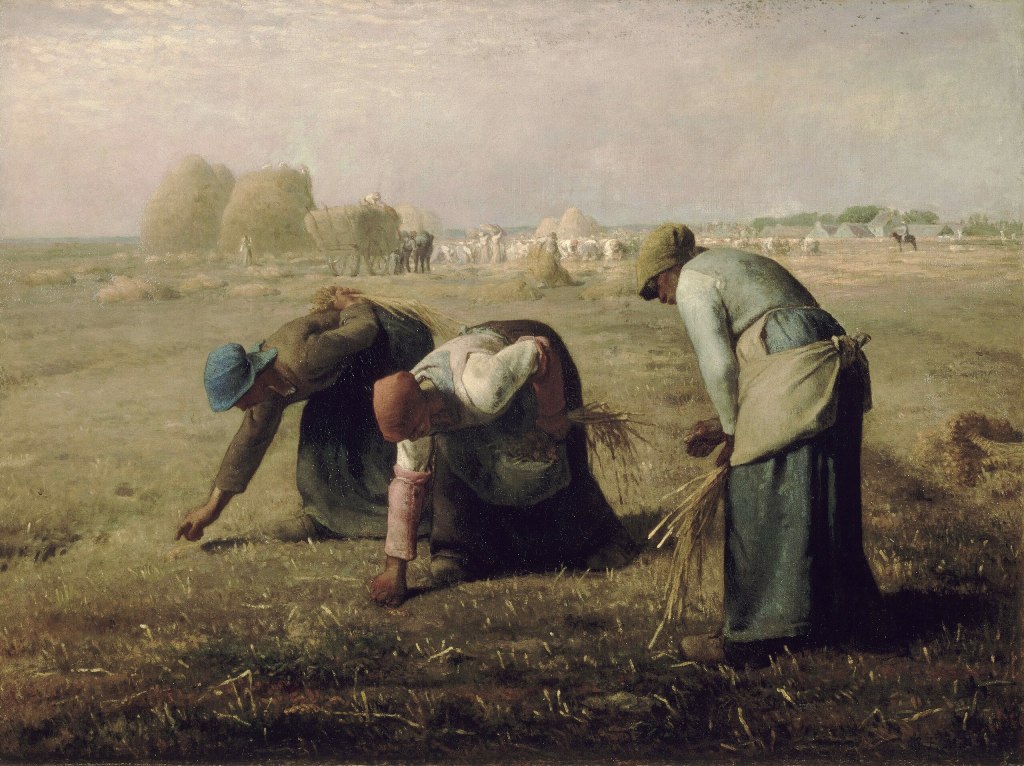
The concept of tzedakah was transformative in Jewish communities over the centuries, inspiring the formation of voluntary societies like tzedakah collectives, the practice of allowing the poor and strangers to consume gleanings, and the placement of pushke, tin boxes for tzedakah money, in homes and synagogues.
Tzedakah is closely aligned with the Jiayan virtue of justice, which calls for all people to uphold fairness, equality, and compassion. When one sees another suffering, it is not out of pity that one should help, but out of duty and respect to one’s fellow being – this is tzedakah. All things are interconnected; by helping one, you help yourself.
Maimonides, who enumerated eight levels of tzedakah, considered ensuring another is self-sufficient to be the most preferable form. While Jiayan philosophy would not be inclined to rank acts of giving, Maimonides’s positioning of this act at the top of the list points to the utility behind tzedakah, for when an individual is no longer dependent on aid, they are free to give more back to their community. Even still, those dependent on tzedakah must give, for giving is recognized as an inherently virtuous act. It’s simply a difference of degree.
The Causality Principle points the way to a society in which the well-being and dignity of all beings is recognized and ensured through the embodiment of the Ten Virtues, which naturally includes justice. It has been noted by some that tzedakah is in a way institutionalized through the establishment of welfare states and the rise of social democratic movements, though this by no means exempts individuals from their own giving. Both personal and collective action is required to improve society.
Applying ethical practices like tzedakah on a national and global level can reduce inequality, promote social justice, eliminate oppression, and ensure everyone has what they need, both physically and psychologically. Greater movement along this path will push humanity further toward alignment with Ji.
 Jiaya
Jiaya 
Leave a comment