“That which is the finest essence – this whole world has that as its Self. That is Reality. That is Atman (Self). That art thou, Śvetaketu.” – Chandogya Upanishad
In my writing, I throw terms around and sort of assume that people will pick up on what they mean based on context clues. I know that’s not always the best idea so it’d probably be helpful to explain some things in a bit more detail, especially when I’m borrowing terms from other philosophies or traditions and recontextualizing them within Jiaya.
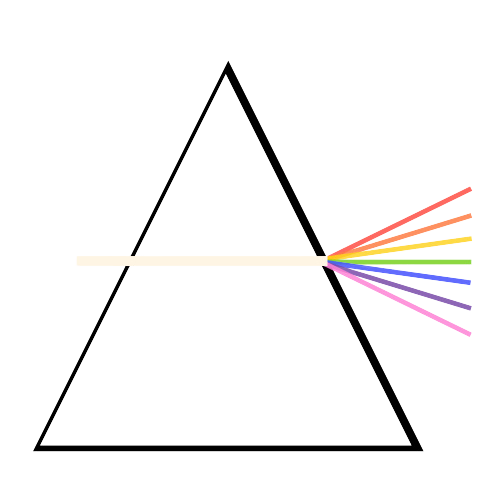
Ji is the catch-all term I use for essentially everything, the totality of all existence, synonymous with Nature, Reality, and the gods of world religions. Ji not only sets the universe in motion, but pervades the universe, and is the universe itself. It’s a creative force, actively manifesting, being born and dying every moment.
Through what we can perceive, we are able to learn the qualities or laws of Ji. To live in step with these natural rhythms of the cosmos is to be aligned with Ji. Over the course of history, many religions, faiths, creeds, and philosophies have elucidated some aspect of this great truth on account of what I attribute to life’s natural inclination towards the Good (Ji‘s nature). As all things are interconnected, none should be cast aside without due consideration.
All things and all beings are infused with Ji. I refer to this common essence of Ji that pervades a particular conditional, impermanent physical thing or being as pneuma. In Stoic philosophy, pneuma makes up the human soul which itself was a fragment of the pneuma of the universal deity or World Soul, an understanding of the cosmos remarkably like the Jiayan one. Pneuma exists in non-living objects as well, binding them together and separating them from the world around them. In Stoicism, however, differentiated from the degree of pneuma that exists in living things, which is referred to as psychê.
This is also consistent with a Jiayan understanding and panexperientialism. All existence, being bound into the interconnected whole, is infused with Ji and has, in its own way, some level of sentience or subjective experience. The point at which microphenomenal experiences (the experiences of fundamental particles, atoms, molecules) transition into macrophenomenal experiences (the experiences of more biologically sophisticated entities) may occur upon the development of a simple nervous system or an equivalent structure. Therefore, something like a rock probably does not have experiences, but the atoms that constitute it do.
So to summarize, Ji constitutes all things, and the aspect of Ji making up oneself is referred to as pneuma. The pneuma animating oneself gives rise to one’s sense of self. However, recognizing that all is interconnected, ever-changing, and part of Ji, we must accept the truth of anattā or non-self. Reality is self, not the illusory pneuma.
 Jiaya
Jiaya 
Leave a comment