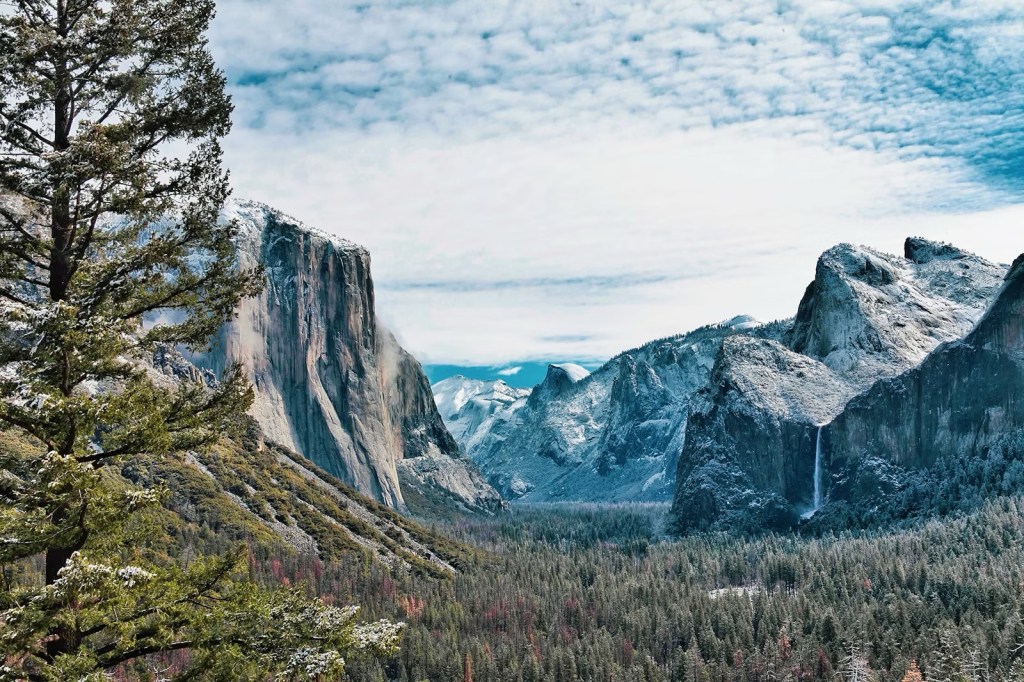
“At present, in this vicinity, the best part of the land is not private property; the landscape is not owned, and the walker enjoys comparative freedom. But possibly the day will come when it will be partitioned off into so-called pleasure-grounds, in which a few will take a narrow and exclusive pleasure only — when fences shall be multiplied, and man-traps and other engines invented to confine men to the public road, and walking over the surface of God’s earth shall be construed to mean trespassing on some gentleman’s grounds.” – Henry David Thoreau
Note that when Jiayan political writings refer to a “Jiayan society” or “Jiayan government”, this does not mean that principles or writings of Jiaya would be enshrined into law or even that individuals in government or wider society would be “Jiayan” or aware of Jiayan writing.
Rather, it’s a shorthand distinction between the current international order defined, generally, by neoliberalism and the presence of political borders and an ideal future international order in which the equality and interconnectedness of humankind is affirmed through global order.
Jiaya envisions that in order to survive humanity must unite into a single global federation in recognition of its interconnectedness, demolishing arbitrary borders and guaranteeing all peoples freedom from fear and want.
The way that property law functions in capitalist society would have to be dismantled top to bottom under a government that operates by Jiayan principles. To understand how property law would be structured in the confines of a Jiyan framework, we can break the concept of property itself down into several types: personal, private, public, creative, and common.
Personal Property
Personal property refers to the possessions and personal objects owned by a particular person — those items that are designated for one’s personal use. An easy way to determine whether something falls under the umbrella of personal property is to ask oneself whether or not it can be easily moved. For example, tangible items like clothes, furniture, household goods, hygienic goods, acquired art, collectibles, and food are all considered personal property.
Property can change in type from personal to private depending on its usage. This is most apparent when it comes to homes. If one owns a house and lives in it, it’s considered personal property. Depriving others of land by claiming an exorbitant amount of it makes it cross the line into private, especially when that land is non-productive. Personal property most typically becomes private when it is deliberately converted into a means of generating passive income.
Essentially, personal property is that which is acquired to be personally consumed or used for self-expression. In a Jiayan society, the protection of personal property from non-consensual acts like theft would be upheld to preserve dignity and autonomy. However, meeting such acts with violence (e.g. killing someone who tried to steal one’s watch) would be a disproportionate response and would not be recognized as just.
Private Property
Private property is most easily understood as property which is used to generate passive income on behalf of its owner. While personal and private property are often conflated, there is a clear distinction between the two.
Take the aforementioned example of land, or homes for instance. If one was using land for the sole purpose of living on it, with the land restricted to the domicile and perhaps a surrounding garden, then it would be personal property. But lease it out to others — for farming, renting, building, etc. — and you’re now extracting surplus value from those actually using the land. Additionally, a government operating by Jiayan principles would also recognize non-residential, non-leased land owned by individuals or groups as private and confiscatory.
Systems centered on private property encourage modes of thinking oriented toward exclusion and possession, reinforcing mental boundaries between what is “mine” and what is not. When extended to essential goods and services (from a Jiayan perspective, goods and services key to the preservation of life and the sustainment of democracy), such systems risk undermining one’s sense of interdependence and transforming basic conditions of dignity into commodities.
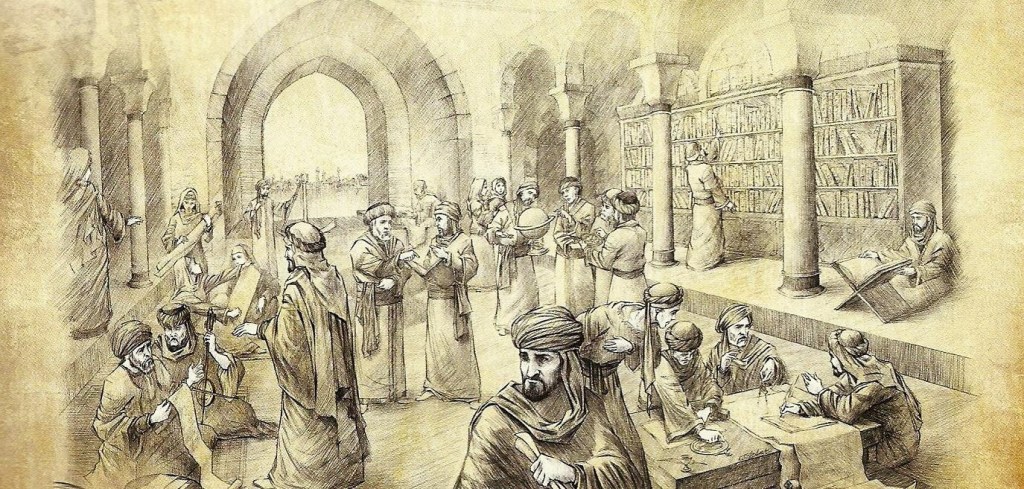
“It seems the most logical thing in the world to believe that the natural resources of the Earth, upon which the race depends for food, clothing and shelter, should be owned collectively by the race instead of being the private property of a few social parasites.” – Ralph Chaplin
Public Property
A fair amount of what currently lies in the private sector (especially as it applies to countries focused on free enterprise) would be public (that is, managed by world, provincial, or local governments) under a Jiayan system in order to ensure fairness, equality, opportunity, and flourishing. These include but may not be limited to the following:
- land: land would be held in common rather than as alienable private property, with individuals and communities granted use-rights for habitation, agriculture, and communal life. Vast swathes of land would be managed by world, provincial, and local governments to preserve ecosystems, protect non-human life, and maintain environmental balance. Government-led initiatives would include setting aside land for renewable energy projects, transitioning cities worldwide to sustainable cities, and restricting certain areas from permanent human habitation
- water: water would be treated as a non-commodifiable public resource, with its extraction, distribution, and infrastructure falling under public ownership
- food: while food production itself would remain distributed across cooperatives, communities, and individuals, a degree of distribution infrastructure would be managed by the world state to ensure that all have access to food and long-term food security
- healthcare: healthcare infrastructure such as hospitals and nursing homes would be publicly owned and governed to ensure universal access, rather than treated as a market commodity
- transit: major transportation infrastructure (railroads and stations, airports, highways, harbors) would be publicly owned and stewarded to facilitate mobility, communication, community, and exchange within a globally integrated society
- knowledge: in a world democracy, access to the accumulated scientific and cultural knowledge of humanity would be treated as a public knowledge of humanity would be of paramount importance
- education: educational infrastructure — primary, secondary, and tertiary institutions — would be publicly managed to ensure broad and equitable access to learning. Vocational schools would be maintained by workers
- internet: core digital infrastructure would be treated as a public utility to ensure universal access, while its maintenance and operation would be carried out by worker-run entities
- libraries: libraries would be permanent fixtures in all settled communities, housing physical and digital copies of humanity’s artistic and cultural heritage in service of preservation, access, and intergenerational continuity
Creative Property
Creative property refers to artistic works created by individuals or groups. It is concerned with the stewardship of a work’s identity over the course of its creator(s)’s life, not the permanent ownership of ideas or techniques. This means that patents or trademarks would not exist in an ideal Jiayan system as they restrict access to ground-breaking technologies and life-saving inventions on the grounds of theft.
In this context, creative property exclusively refers to expressive works such as books or series of books, songs or album, films or series of films, seasonal television series, video games or series of video games, paintings, drawings, or similar visual works, poems, plays, sculptures, or any other extant or future medium through which human imagination can be conveyed.
The creator(s) of a work would have sole rights of distribution, editing, and version control for their lifetimes or for a reasonably defined period in the event that human lifespans increase dramatically. These rights exist to preserve artistic integrity, encourage risk-taking, and foster more diverse, original works.
After this period, the work would enter the cultural commons of human society and be made publicly available through libraries and archival institutions. Physical works such as paintings or sculptures would be entrusted to museums or similar public institutions. An artist is under no obligation to make their work public or even preserve their work once made public — they have the right to destroy it before the end of the stewardship period. In cases where multiple versions exist, the state would maintain the creator(s)’s preferred version for archival purposes.
Common Property
Common property, also referred to as “the commons,” are those aspects of the Earth and the universe as a whole that cannot be enclosed, alienated, or monopolized without undermining interconnectedness and interdependence. Unlike public property, which is stewarded by public institutions, common property is held in trust by all beings.
The commons include the atmosphere, oceans and major water bodies, ecosystems and biodiversity, genetic and seed heritage, outer space, and cultural works once released from creative stewardship. These are not owned by states or markets, but protected and governed to prevent enclosure, degradation, or loss.
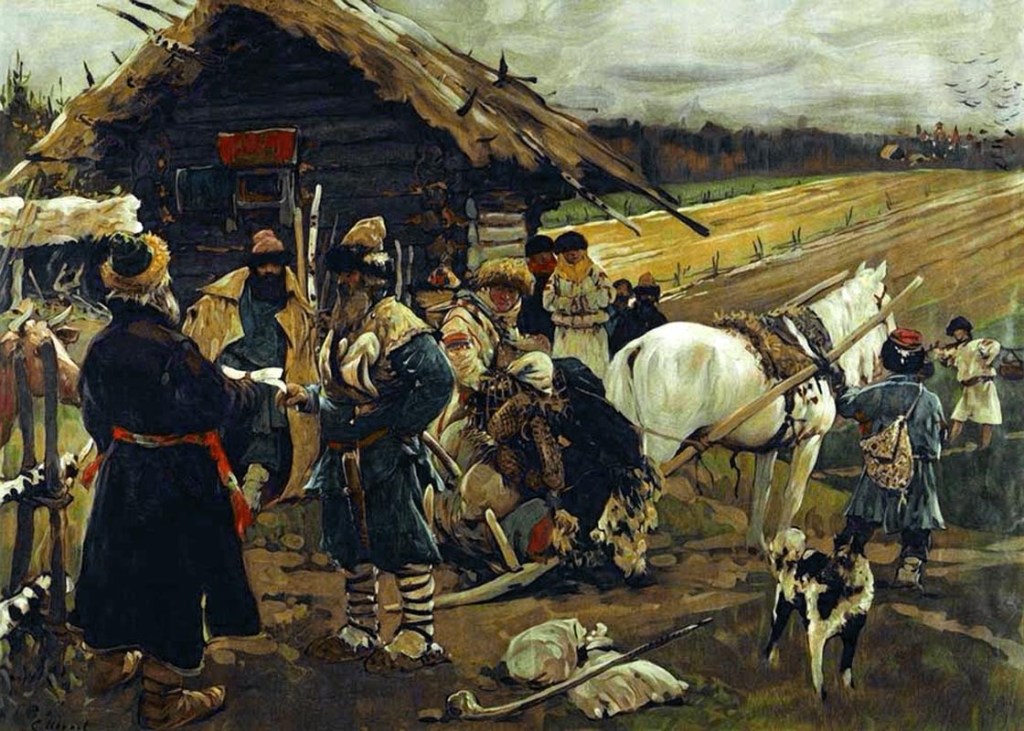
“As soon as the land of any country has all become private property, the landlords, like all other men, love to reap where they never sowed, and demand a rent even for its natural produce.” – Adam Smith
 Jiaya
Jiaya 
Leave a comment