“Culture is being threatened when all worldly objects and things, produced by the present or the past, are treated as mere functions for the life process of society, as though they are there only to fulfill some need, and for this functionalization it is almost irrelevant whether the needs in question are of a high or a low order.” – Hannah Arendt
Since the development of specialized labor, the work of artists and craftspeople has been divided into two distinct (yet non-exclusive) camps: art-as-practice and art-as-instrument. It is a division not grounded in the talents and efforts of the artists who take part in a work’s creation, but in the way the process of creation is structured.
Art-as-practice is that which serves to communicate one’s own lived experience or perception into a medium or mediums of choice. Engaging with such works naturally inspires empathy for other perspectives, contemplation of ambiguity and failure, and reflection on themes, morality, and the human condition. At times, an artist may seek to challenge audiences, readers, listeners, etc. in skill and/or feeling. The decorative and applied arts as well as architecture can synthesize function and human flourishing with beauty and expression.
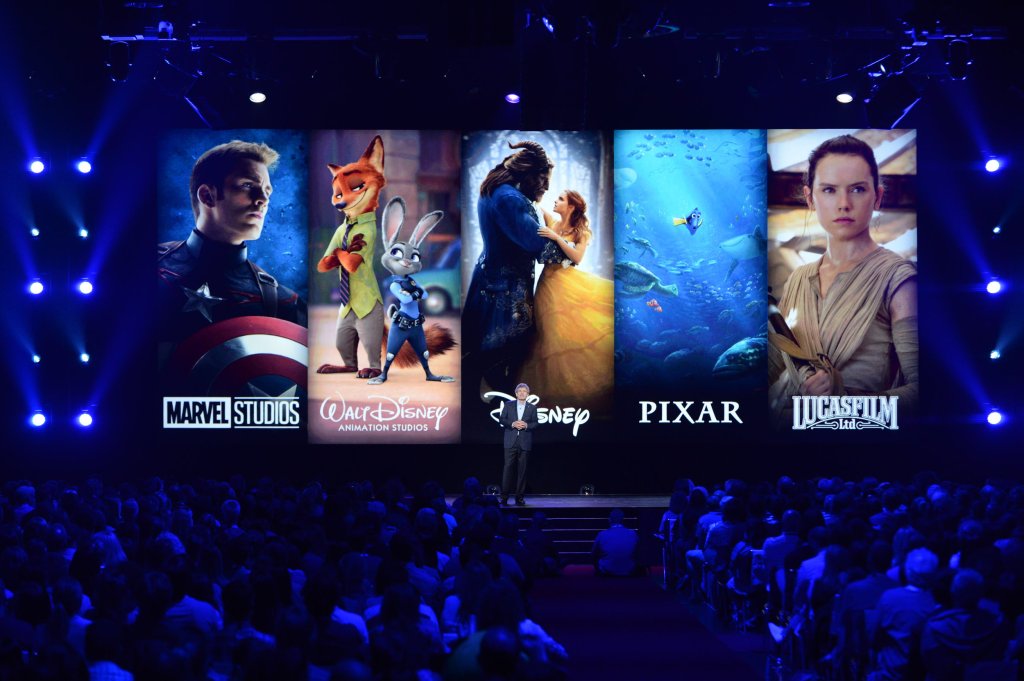
Art-as-instrument is concerned primarily with mass appeal and engagement retention. It minimizes risk-taking, ambiguity, and meaningful expression in favor of alignment with market research and profit. Individual artists can do good work on such projects but ultimately, very little of their voice shines through on the final product. “Product” being the key term here.
The art-as-instrument approach does not consider art as a means of transcendent human connection and understanding; instead, it functions purely as another business. The production of such art is inherently designed to be safe in order to please as many groups as possible. The individual artists hired cannot veer off course lest they tarnish the brand.
I’ve asserted before that art is the closest thing we have to a universal language. Ideas, feelings, thoughts, and concepts can be transmitted across cultural boundaries and even time through its creation. And then there’s the process of creation itself. By making art, humans participate in the universe’s natural creative unfolding.
The reduction of this aspect of existence to easily consumable product, churned out ad nauseam by corporations swallowing up IP, is emblematic of the failure of modern institutions to safeguard culture and the timeless stories and ideas that make us who we are. It’s the product of structures that prioritizes extraction over stewardship. In capitalism, culture is a resource to be mined for profit, rather than revered and engaged with.
Art must be returned to the people and artists must have control over their work to ensure unique, challenging, insightful concepts are explored and visions aren’t watered down, sanitized, or altered for the sake of shareholder value.
Engagement with primarily instrumental art is not bad or a moral failing. Many artists put their heart and soul into the work, even when it may be compromised in subservience to corporate interests. It does, however, cause cultural stagnation and represents a broader societal need for escapism (on account of its predictable, reliable, low-stakes storytelling) when it becomes the dominant form of art.
Diverse voices and forms of expression are essential for progress and growth. We must actively seek out art that makes us think, feel, challenges us. None of these things are incompatible with fun. It’s the mindset behind the art that matters. Did the artist make a superhero movie because they wanted to present their own unique spin on the subject, perhaps recontextualize a moral theme or modern issues in a superhero context, or did they want to make a superhero movie to chase market trends and cynically fit as many popular characters into the product as possible?
Culture needs a “balanced diet” to survive and for people to be truly connected with each other. In this analogy, as you might have guessed, art that serves purely to entertain and contains no inherent meaning is junk food to be consumed (another key word) minimally, if at all. Without spaces for genuine expression, societies lose the means by which they understand not just themselves and one another, but the nature of all things.
 Jiaya
Jiaya 
Leave a comment