“Human history becomes more and more a race between education and catastrophe.” – H.G. Wells
After some thought, I have decided to scrap the Henosian Calendar/dating system that I’d come up with. It was overly complicated to calculate dates and not easily understandable at a glance. I also wasn’t even always sure the dates were right to be completely honest. When even the person who developed the system finds it cumbersome to work with, you know it’s time to cut your losses and look for something better.
The Henosian Ages, framed as Henosian Periodization, will remain as part of the larger Jiayan ecosystem. They were the most crucial component of the calendar concept anyway and do not rely on the calendar to exist. It provides readers with the important lens through which Jiaya interprets history; that is, tracking humanity’s development along the Progress Principle, the importance of which has been made increasingly clear in recent years.
However, I’m under no illusion that the Gregorian Calendar is the ideal system. It still has all the problems I presented and others have pointed out numerous times:
- the absence of a year zero
- the difficulties of counting backward in BCE/BC
- a starting point based on a miscalculated event (the birth of Jesus) which assumes the primacy of Christianity
- the separation between BCE and CE (BC and AD) creates an unconscious distinction between humans on one side of the calendar and humans on the other, similarly to how we might perceive people in black and white photos as from long ago when the development of photography is very recent
As such, anywhere dates are provided in the calendar system we all know and are accustomed to, they will be supplemented with the date on the Holocene Calendar, which was proposed by Cesare Emiliani in 1993 (11993). Calculations for dates on this calendar are fairly simple, unlike the convoluted Henosian system I had developed.
- for CE dates: just add 10,000 to the year. As of the time of writing, it would be 12026
- for BCE dates: take 10,001 and then subtract the BCE year
- For very ancient dates: BCE – 10,000
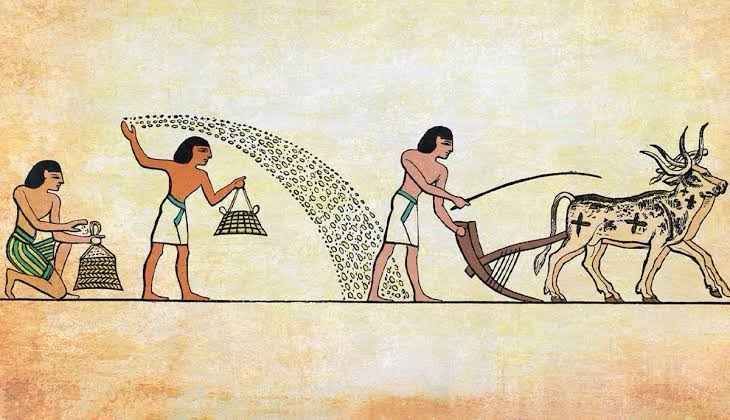
As you might have guessed, the Holocene Calendar begins roughly 10,000 years ago, roughly aligned with the beginning of the Henosian Agricultural Age and geological Holocene Epoch, both of which begin 11,700 years ago. It also coincides with the start of the slow transition from nomadic hunter-gathering to permanent settlements and the end of the last glacial period.
I knew of the Holocene Calendar when I came up with the Henosian one. In fact, it was my inspiration. I was just resistant to adopt it because it didn’t line up precisely with the start of the Holocene Epoch.
At the end of the day though, complete accuracy must be balanced with practicality and utility for daily life so the Holocene Calendar is the superior option.
 Jiaya
Jiaya 
Leave a comment